
Today's AI Tip
← All posts

The one line that stops Claude from guessing what you meant
· View on Instagram · View on Facebook

The one line that stops Claude from guessing what you meant
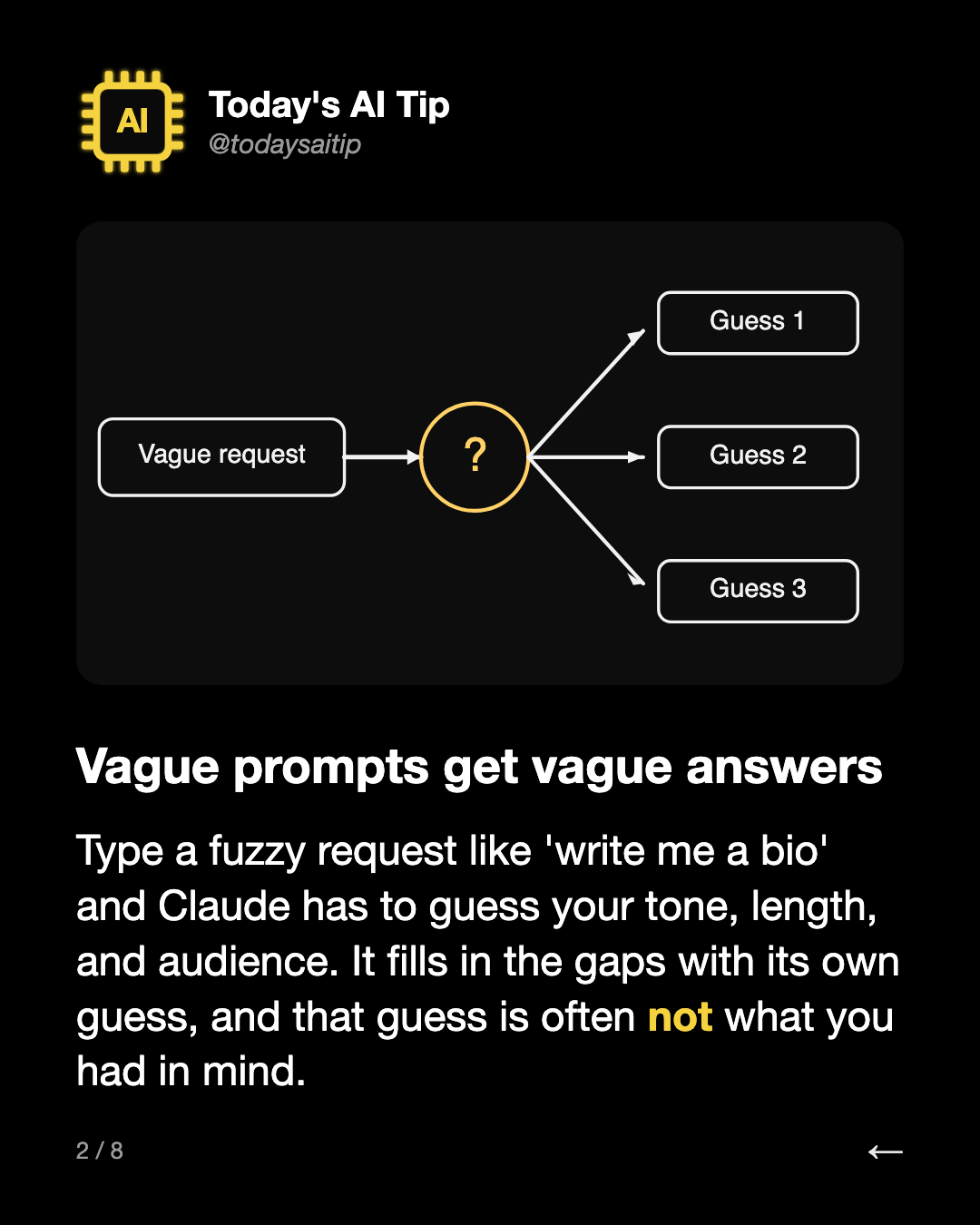
Vague prompts get vague answers. Type a fuzzy request like 'write me a bio' and Claude has to guess your tone, length, and audience. It fills in the gaps with its own guess, and that guess is often not what you had in mind.
Vague prompts get vague answers

Type a fuzzy request like 'write me a bio' and Claude has to guess your tone, length, and audience. It fills in the gaps with its own guess, and that guess is often not what you had in mind.

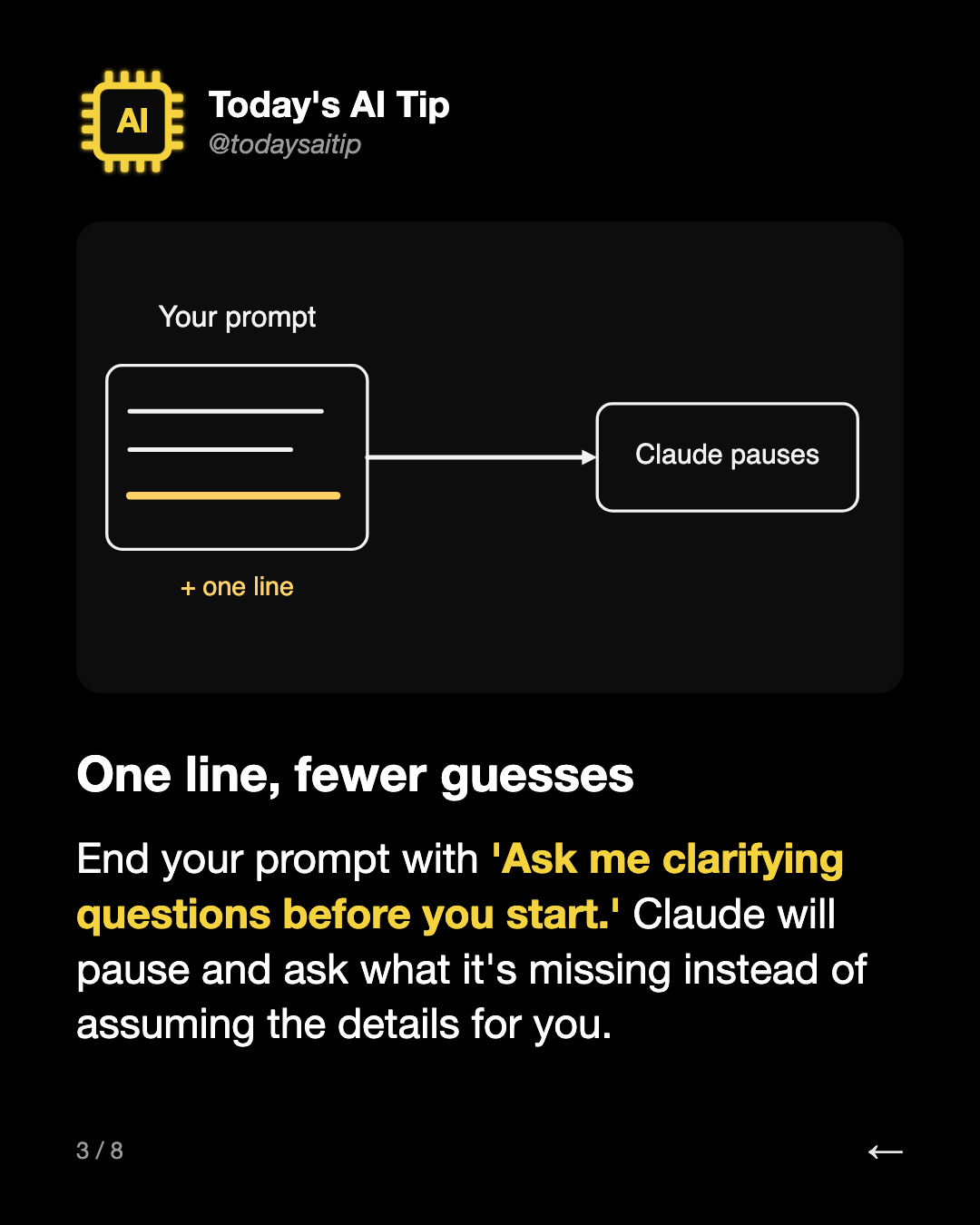
One line, fewer guesses. End your prompt with 'Ask me clarifying questions before you start.' Claude will pause and ask what it's missing instead of assuming the details for you.
One line, fewer guesses

End your prompt with 'Ask me clarifying questions before you start.' Claude will pause and ask what it's missing instead of assuming the details for you.

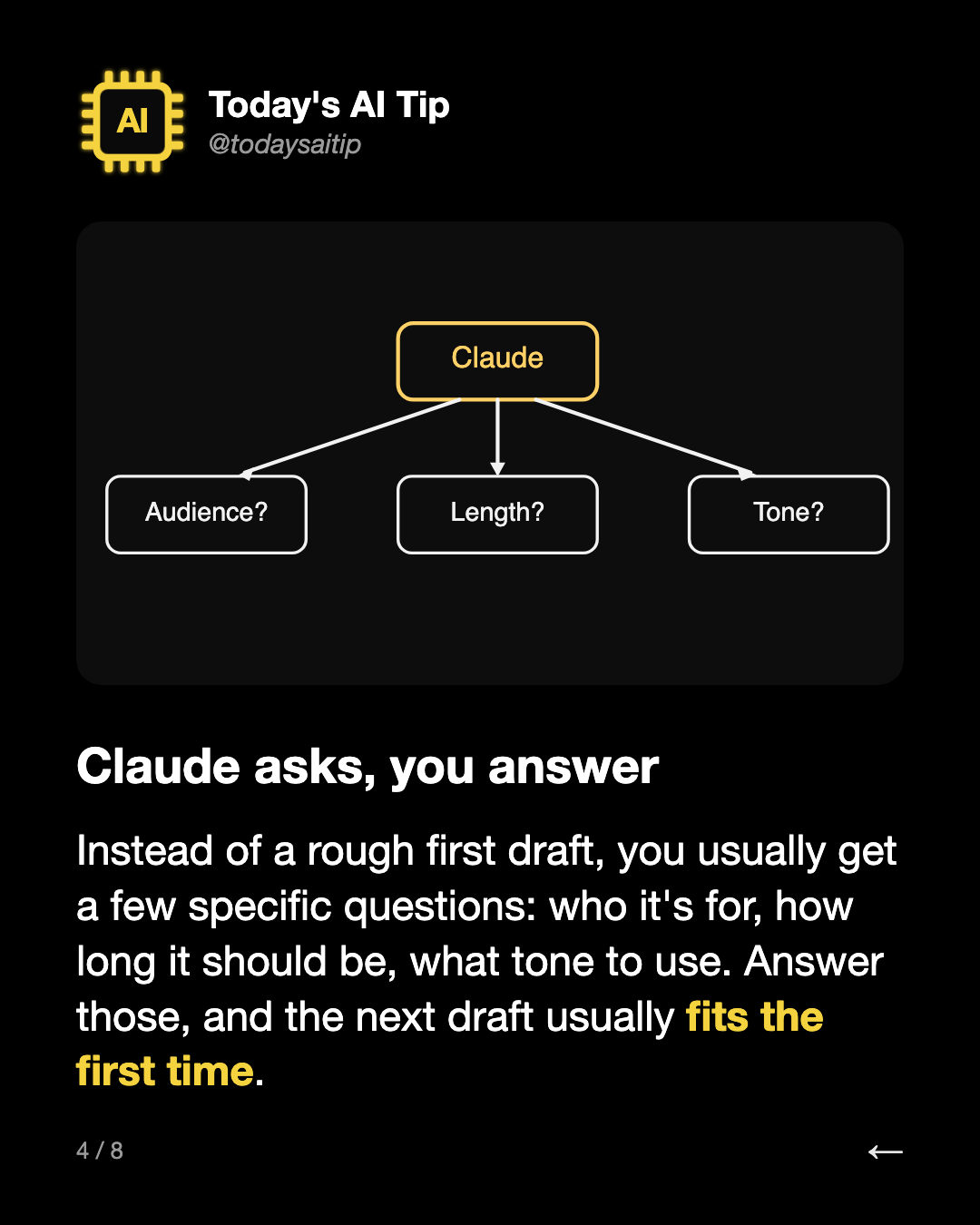
Claude asks, you answer. Instead of a rough first draft, you usually get a few specific questions: who it's for, how long it should be, what tone to use. Answer those, and the next draft usually fits the first time.
Claude asks, you answer

Instead of a rough first draft, you usually get a few specific questions: who it's for, how long it should be, what tone to use. Answer those, and the next draft usually fits the first time.

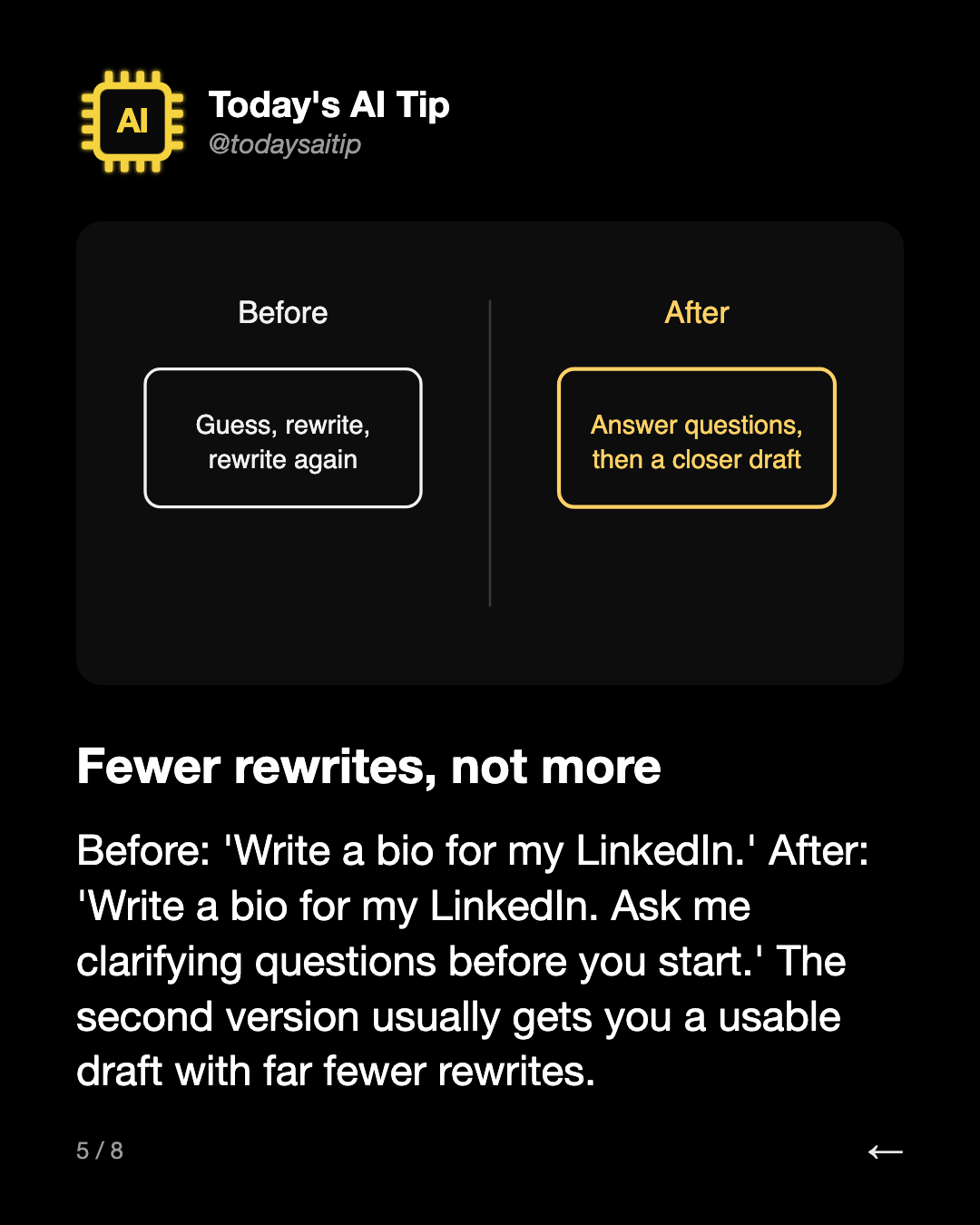
Fewer rewrites, not more. Before: 'Write a bio for my LinkedIn.' After: 'Write a bio for my LinkedIn. Ask me clarifying questions before you start.' The second version usually gets you a usable draft with far fewer rewrites.
Fewer rewrites, not more

Before: 'Write a bio for my LinkedIn.' After: 'Write a bio for my LinkedIn. Ask me clarifying questions before you start.' The second version usually gets you a usable draft with far fewer rewrites.

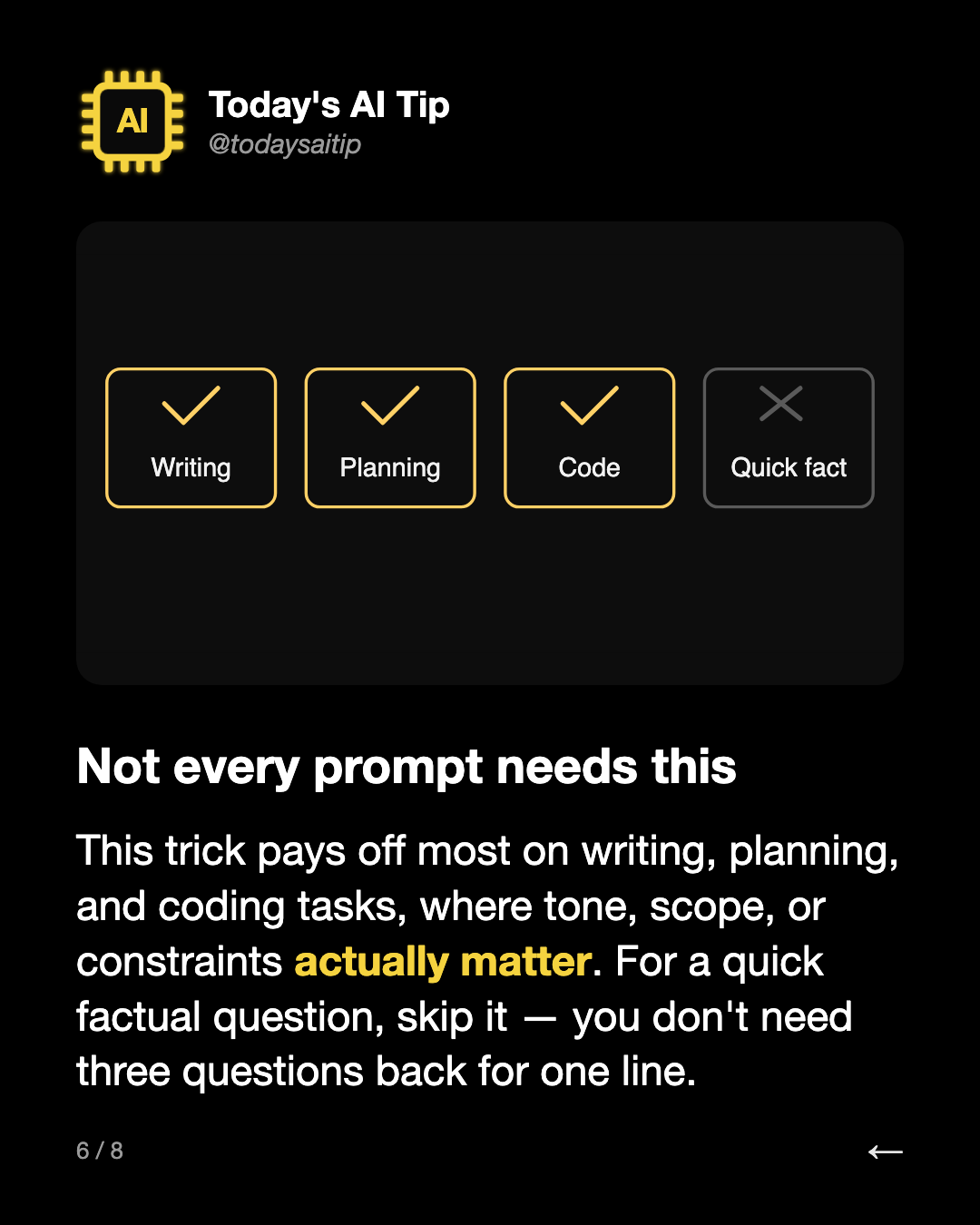
Not every prompt needs this. This trick pays off most on writing, planning, and coding tasks, where tone, scope, or constraints actually matter. For a quick factual question, skip it — you don't need three questions back for one line.
Not every prompt needs this

This trick pays off most on writing, planning, and coding tasks, where tone, scope, or constraints actually matter. For a quick factual question, skip it — you don't need three questions back for one line.

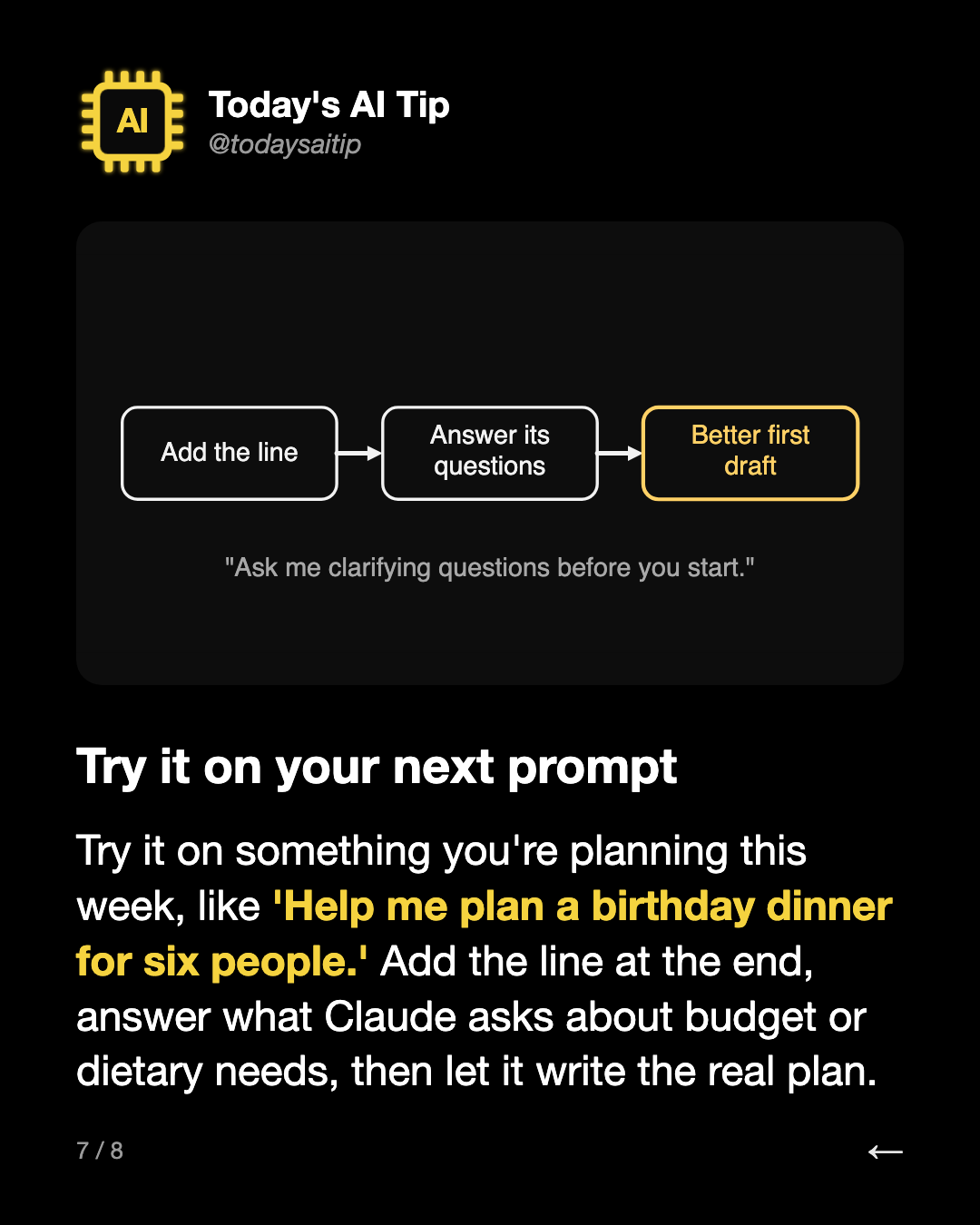
Try it on your next prompt. Try it on something you're planning this week, like 'Help me plan a birthday dinner for six people.' Add the line at the end, answer what Claude asks about budget or dietary needs, then let it write the real plan.


Try it on your next prompt

Try it on something you're planning this week, like 'Help me plan a birthday dinner for six people.' Add the line at the end, answer what Claude asks about budget or dietary needs, then let it write the real plan.

Follow @todaysaitipSave this post on Instagram

More posts