 Today's AI Tip
AI hallucinations aren't random. They cluster in a few predictable spots

The myth: it's always guessing
The common complaint is that chatbots "just make things up," as if every answer is a coin flip. That's not accurate. Most answers are grounded in patterns the model actually learned. Fabrication is the exception, and it shows up in a few predictable spots.
Dense data vs. thin data
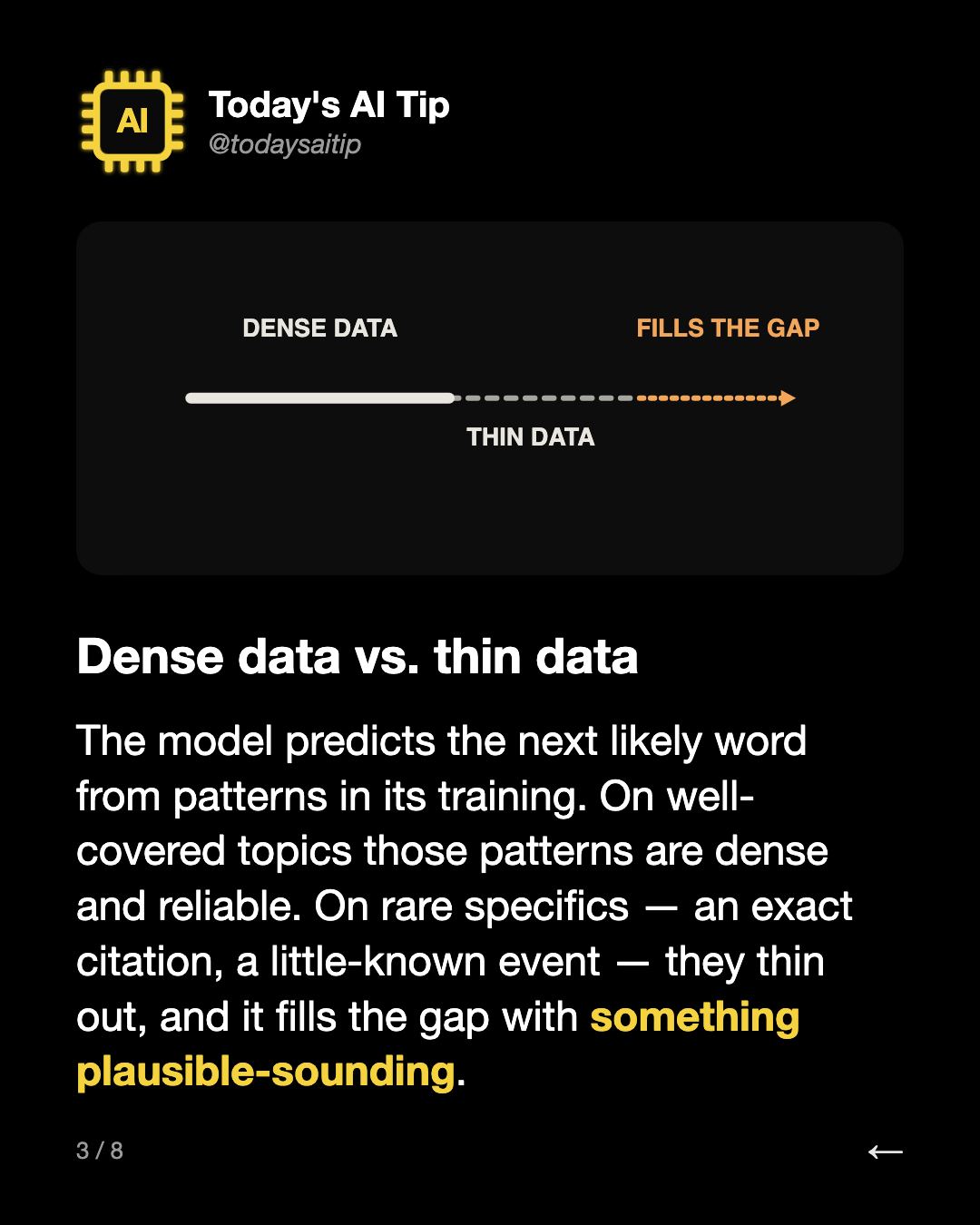
The model predicts the next likely word from patterns in its training. On well-covered topics those patterns are dense and reliable. On rare specifics — an exact citation, a little-known event — they thin out, and it fills the gap with something plausible-sounding.
Where it actually happens
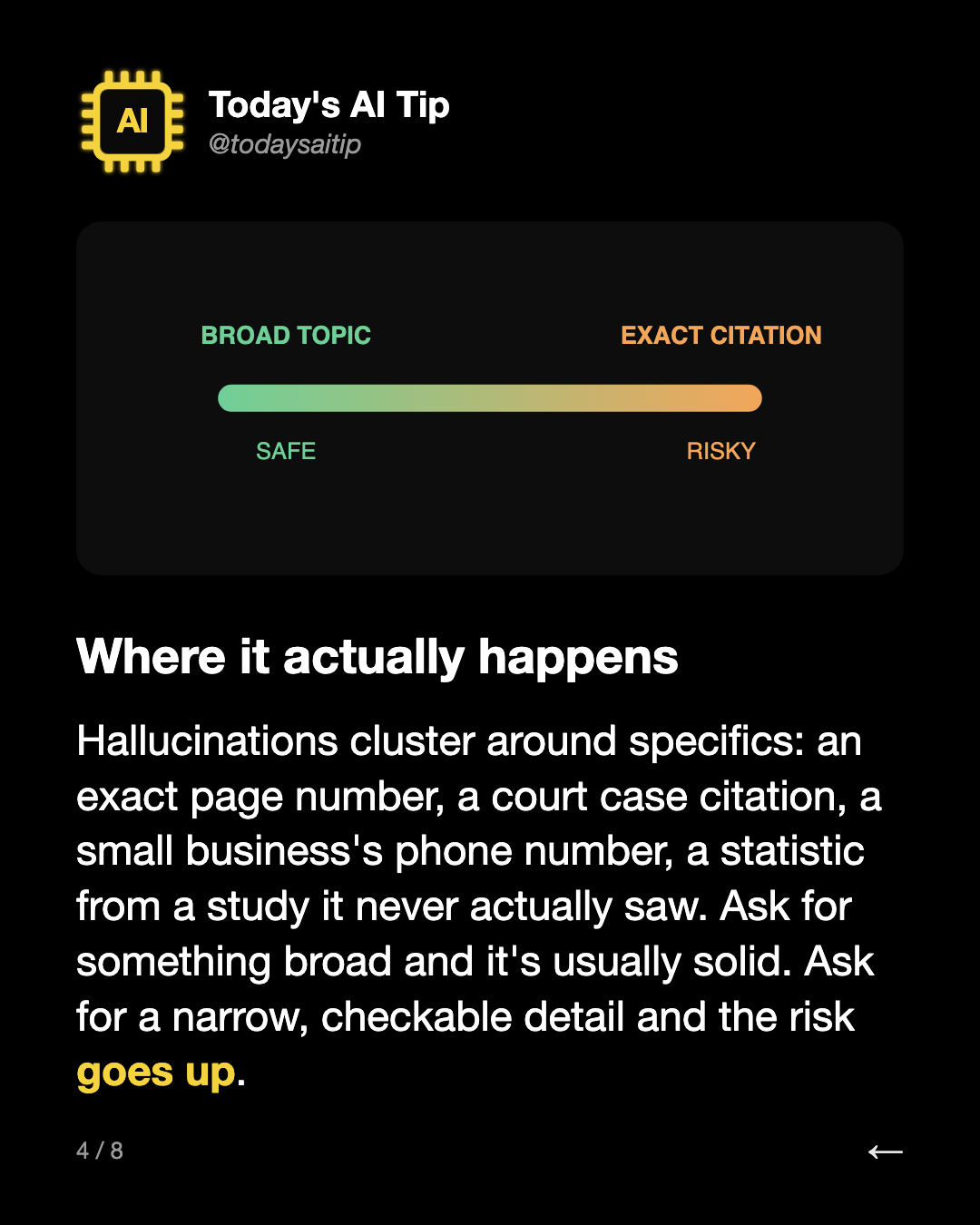
Hallucinations cluster around specifics: an exact page number, a court case citation, a small business's phone number, a statistic from a study it never actually saw. Ask for something broad and it's usually solid. Ask for a narrow, checkable detail and the risk goes up.
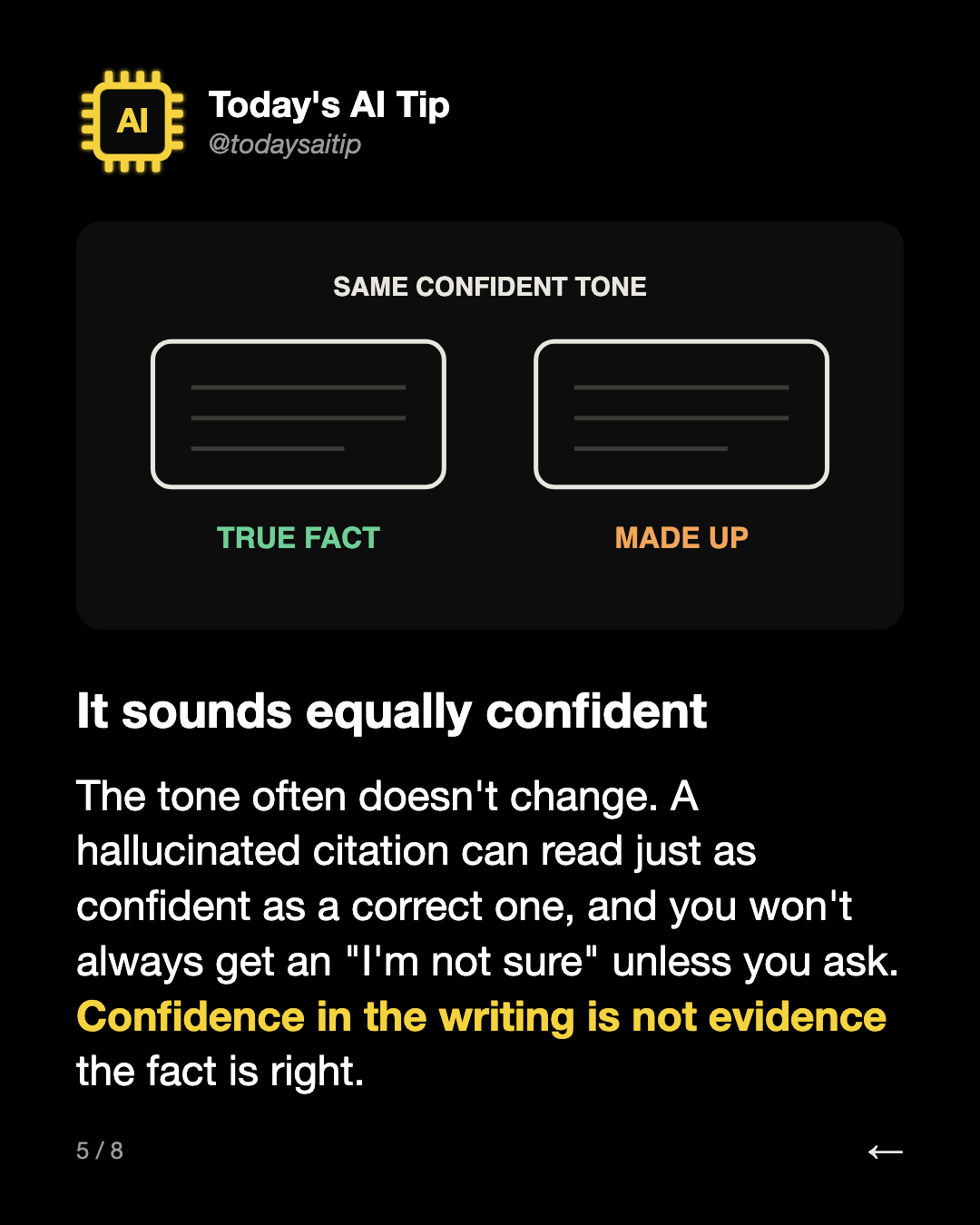
It sounds equally confident
The tone often doesn't change. A hallucinated citation can read just as confident as a correct one, and you won't always get an "I'm not sure" unless you ask. Confidence in the writing is not evidence the fact is right.
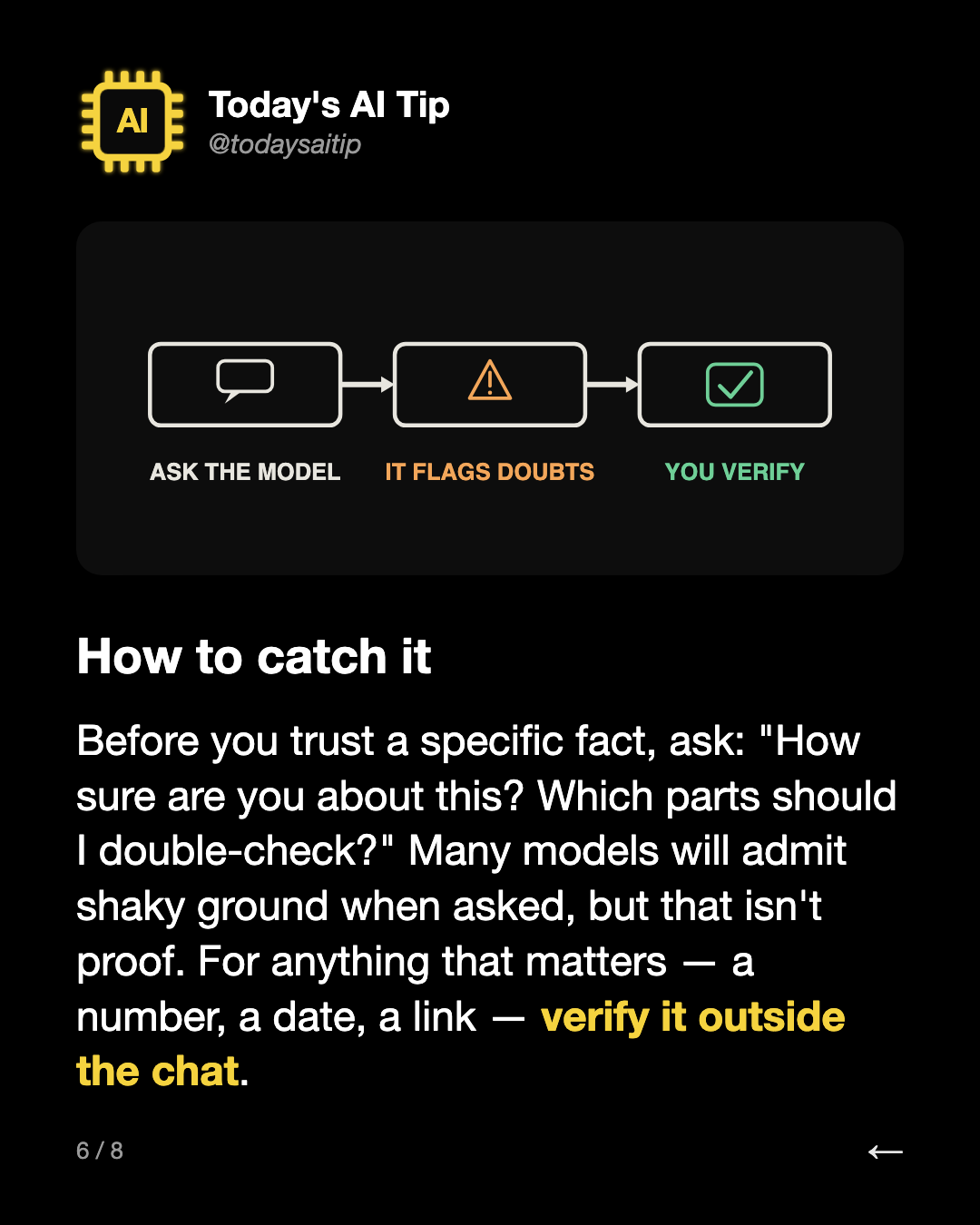
How to catch it
Before you trust a specific fact, ask: "How sure are you about this? Which parts should I double-check?" Many models will admit shaky ground when asked, but that isn't proof. For anything that matters — a number, a date, a link — verify it outside the chat.
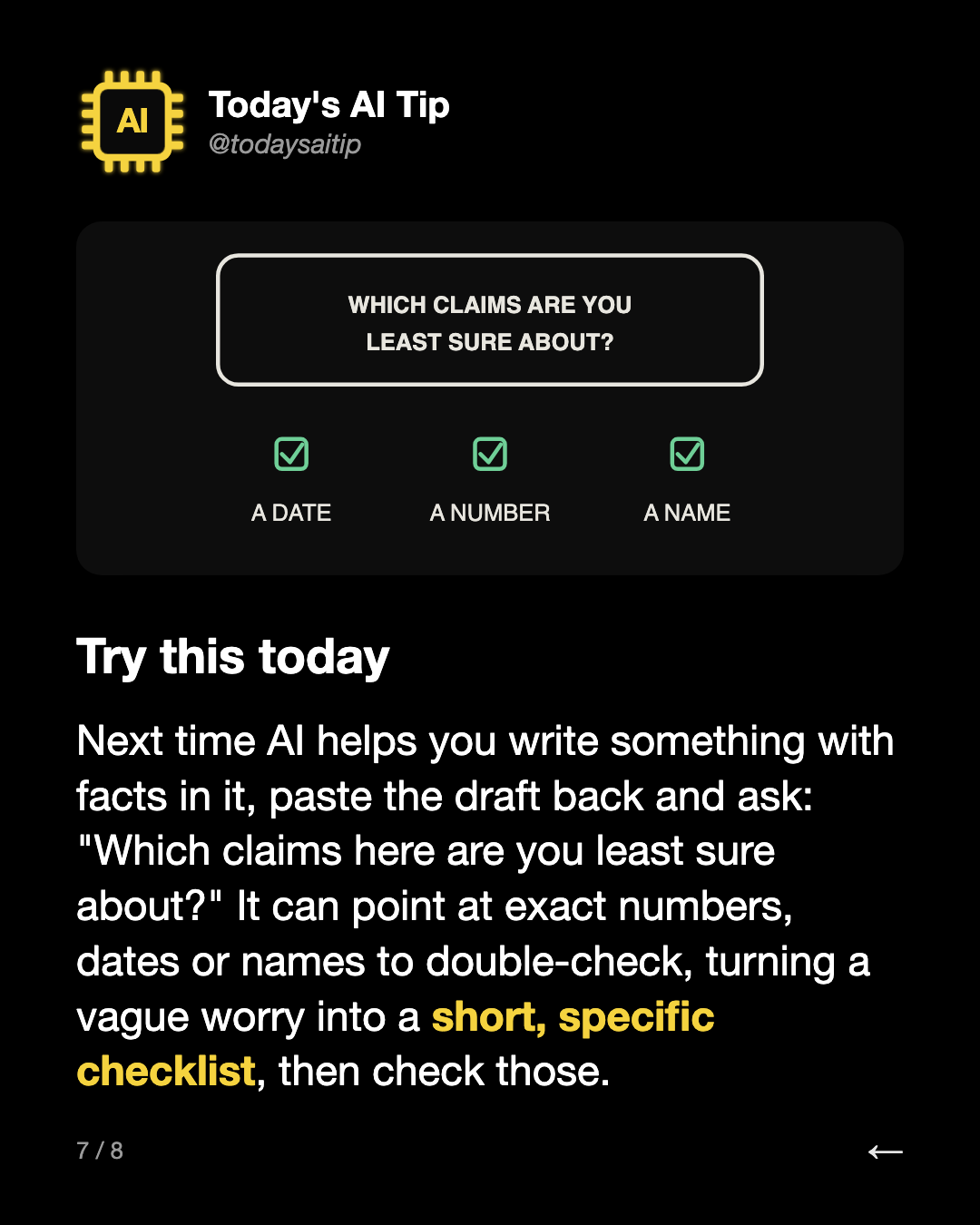
Try this today
Next time AI helps you write something with facts in it, paste the draft back and ask: "Which claims here are you least sure about?" It can point at exact numbers, dates or names to double-check, turning a vague worry into a short, specific checklist, then check those.