 Today's AI Tip
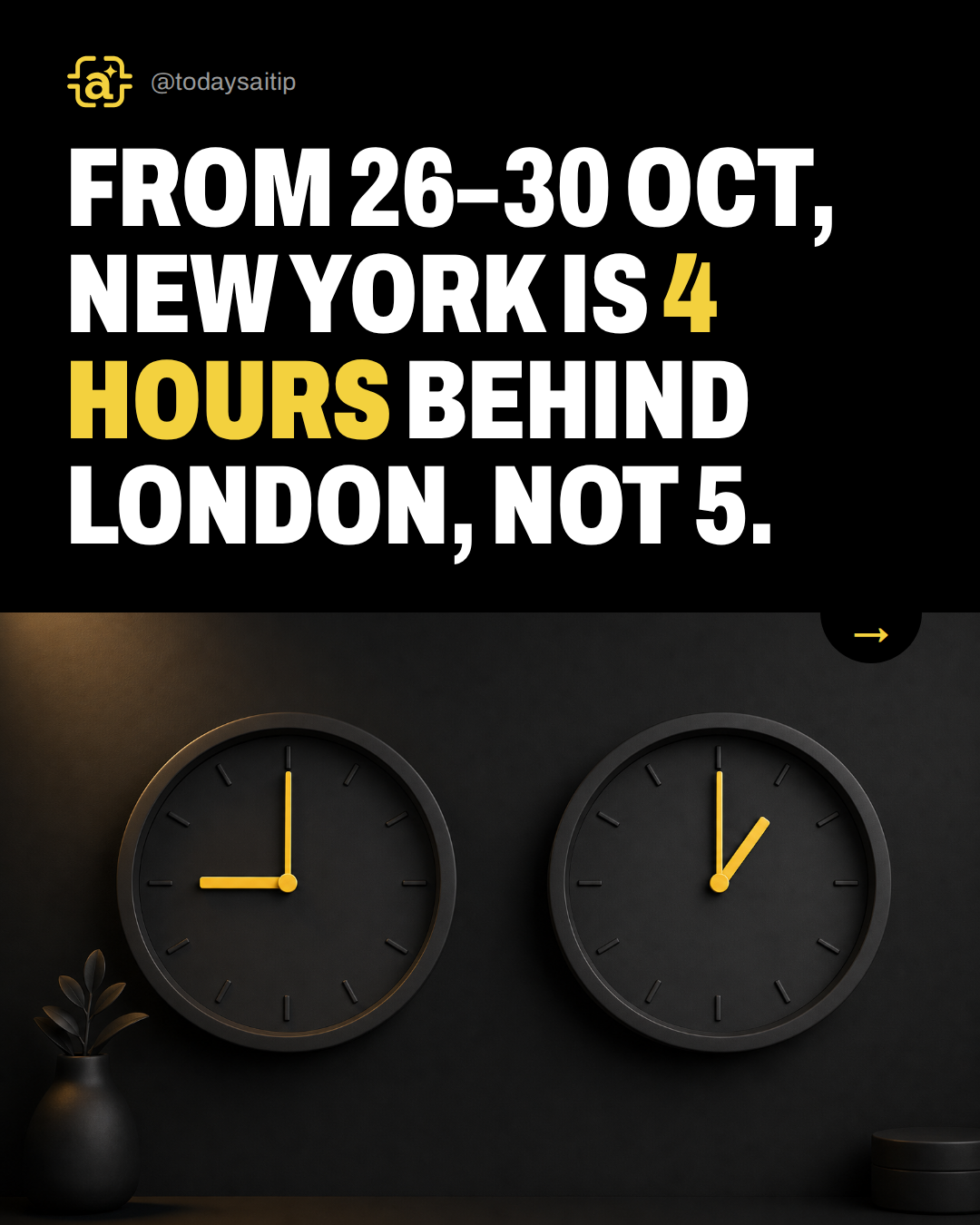
From 26–30 Oct, New York is 4 hours behind London, not 5.
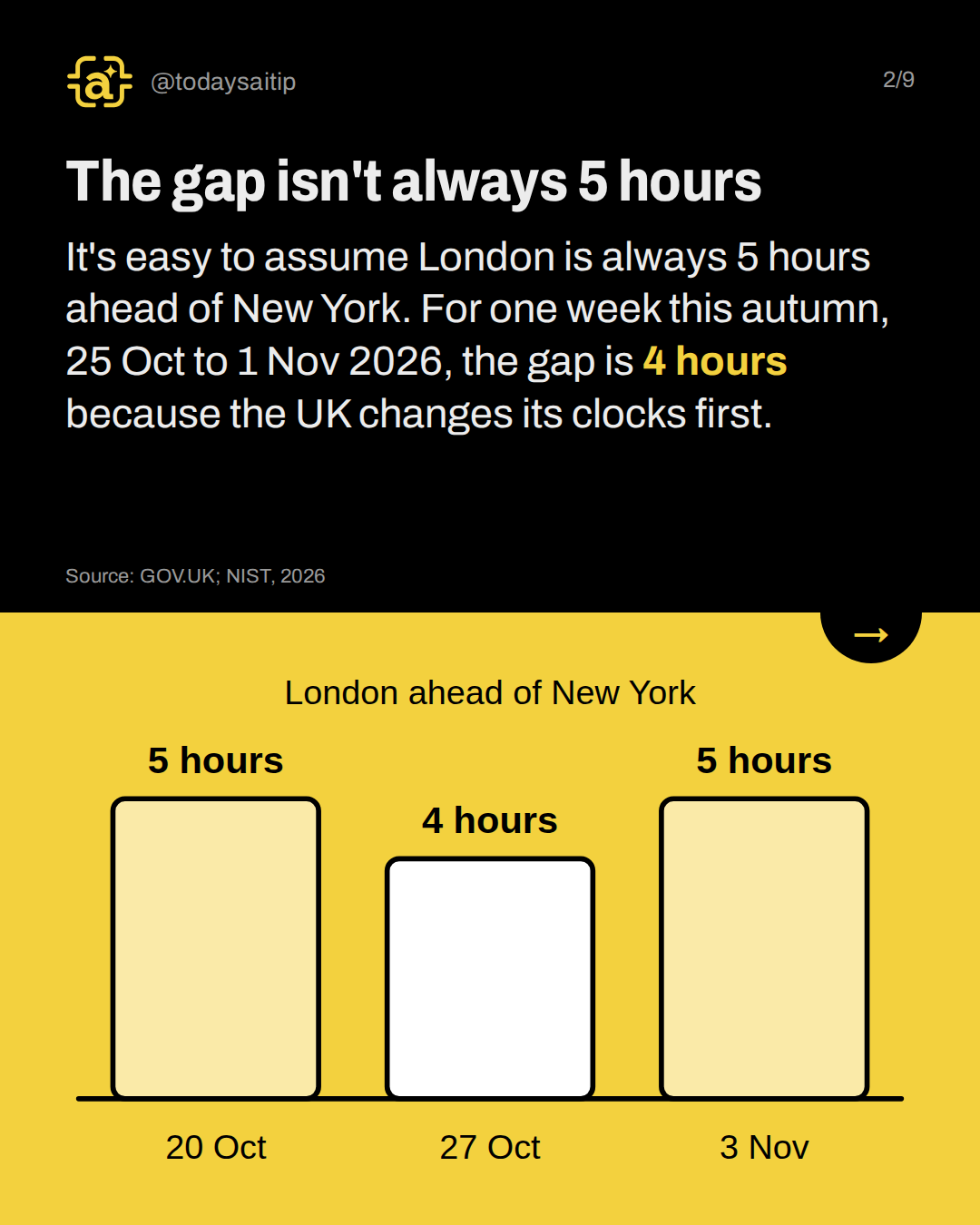
The gap isn't always 5 hours
It's easy to assume London is always 5 hours ahead of New York. For one week this autumn, 25 Oct to 1 Nov 2026, the gap is 4 hours because the UK changes its clocks first.
Source: GOV.UK; NIST, 2026
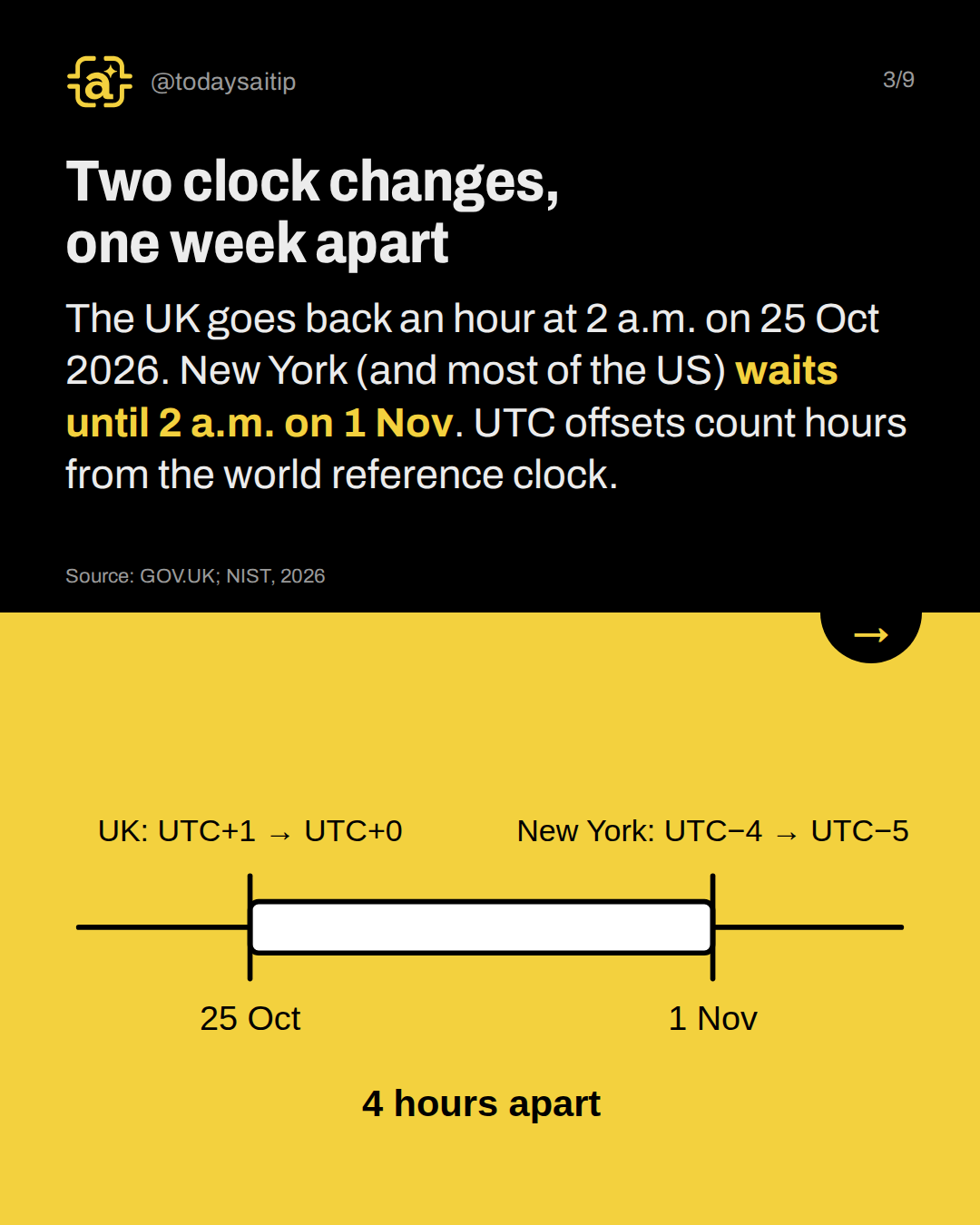
Two clock changes, one week apart
The UK goes back an hour at 2 a.m. on 25 Oct 2026. New York (and most of the US) waits until 2 a.m. on 1 Nov. UTC offsets count hours from the world reference clock.
Source: GOV.UK; NIST, 2026
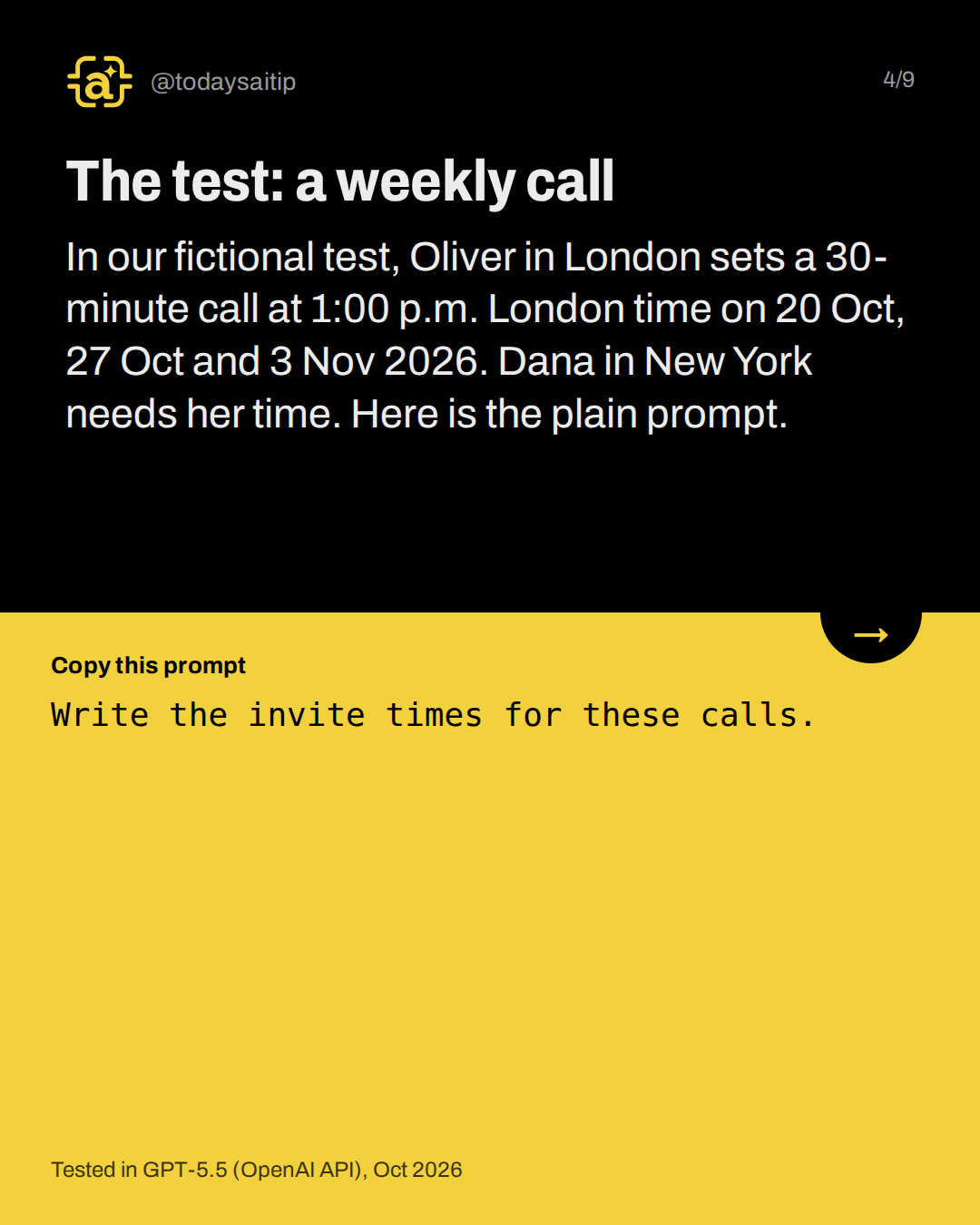
The test: a weekly call
Tested in GPT-5.5 (OpenAI API), Oct 2026
In our fictional test, Oliver in London sets a 30-minute call at 1:00 p.m. London time on 20 Oct, 27 Oct and 3 Nov 2026. Dana in New York needs her time. Here is the plain prompt.
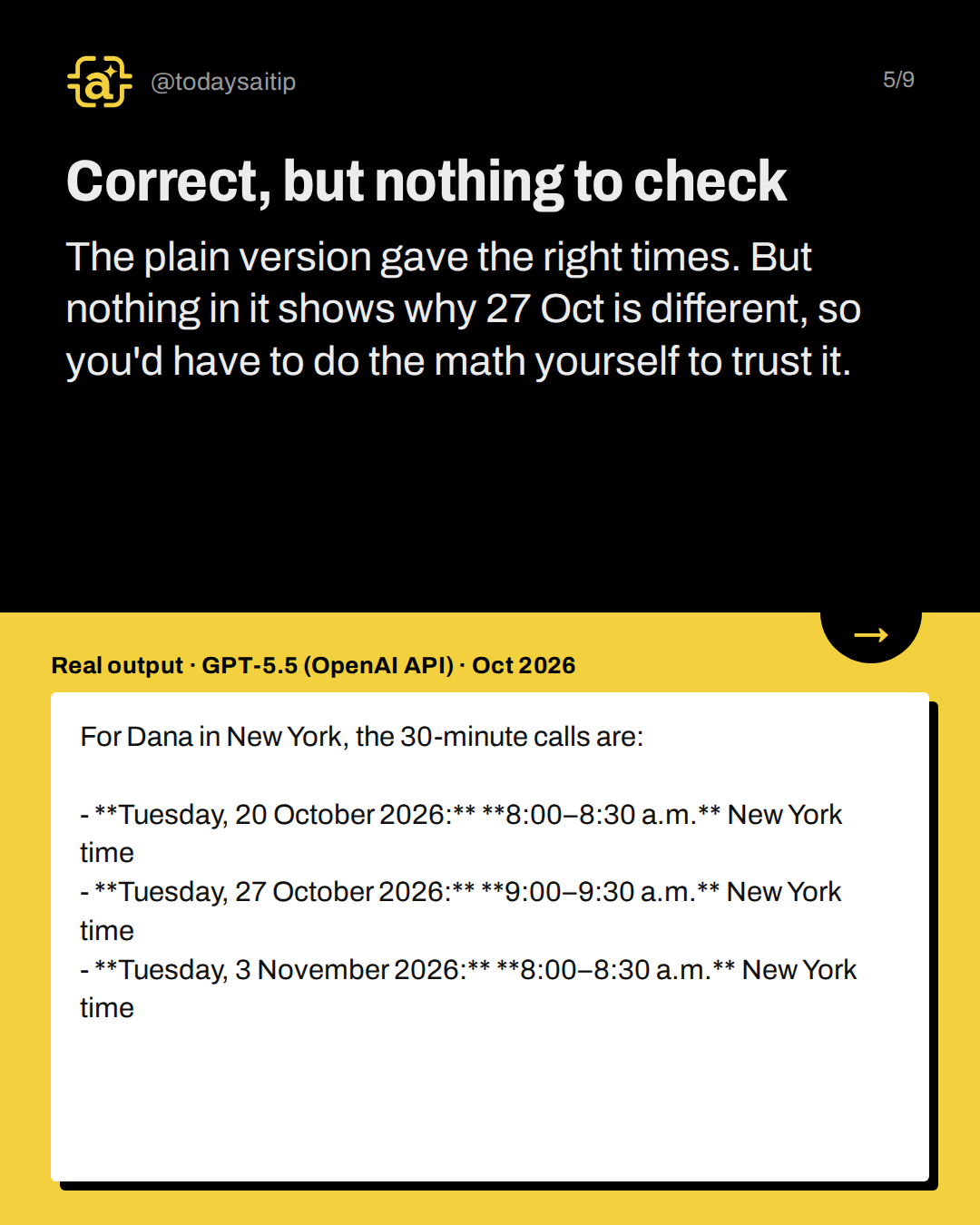
Correct, but nothing to check
Real output · GPT-5.5 (OpenAI API) · Oct 2026
The plain version gave the right times. But nothing in it shows why 27 Oct is different, so you'd have to do the math yourself to trust it.
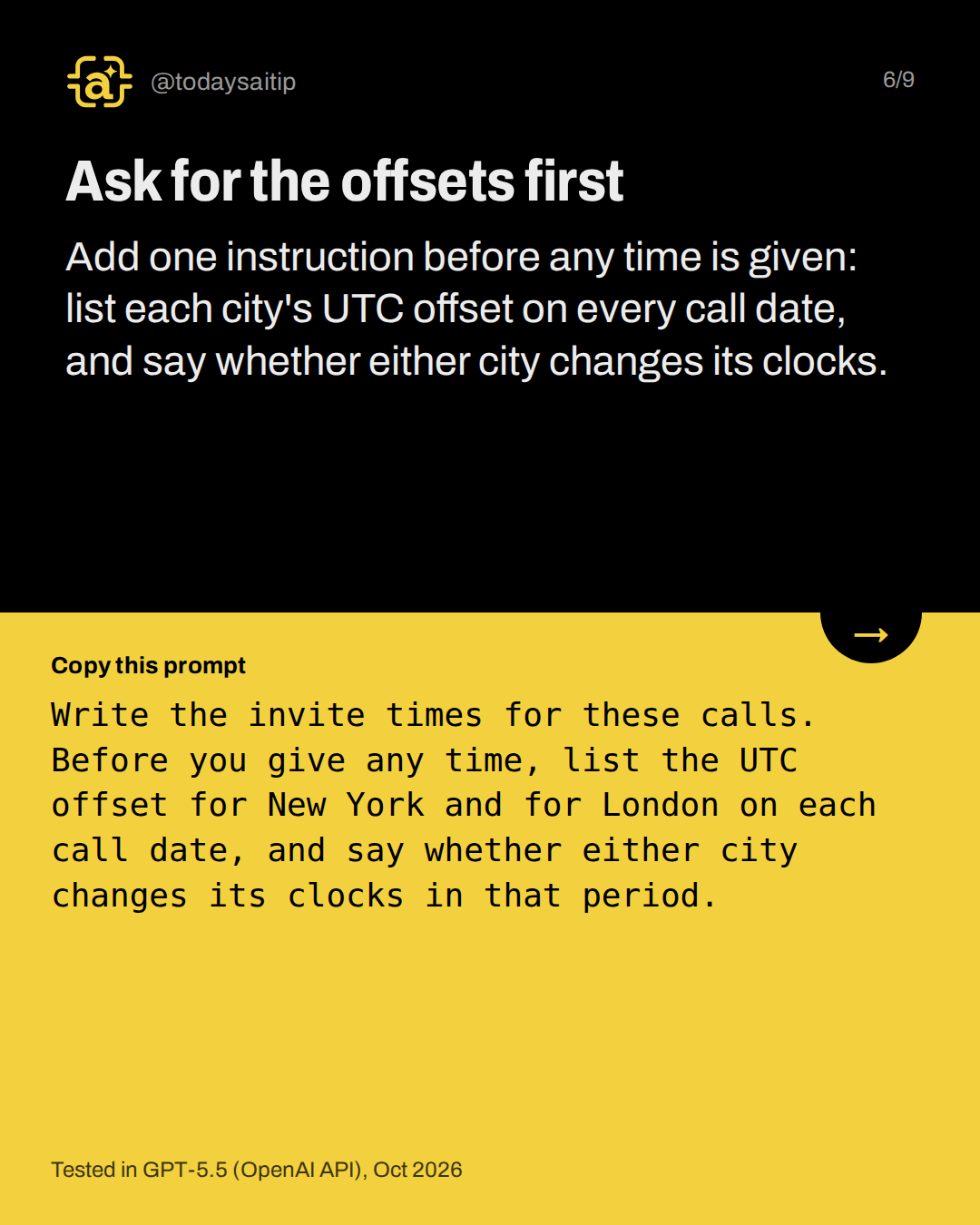
Ask for the offsets first
Tested in GPT-5.5 (OpenAI API), Oct 2026
Add one instruction before any time is given: list each city's UTC offset on every call date, and say whether either city changes its clocks.
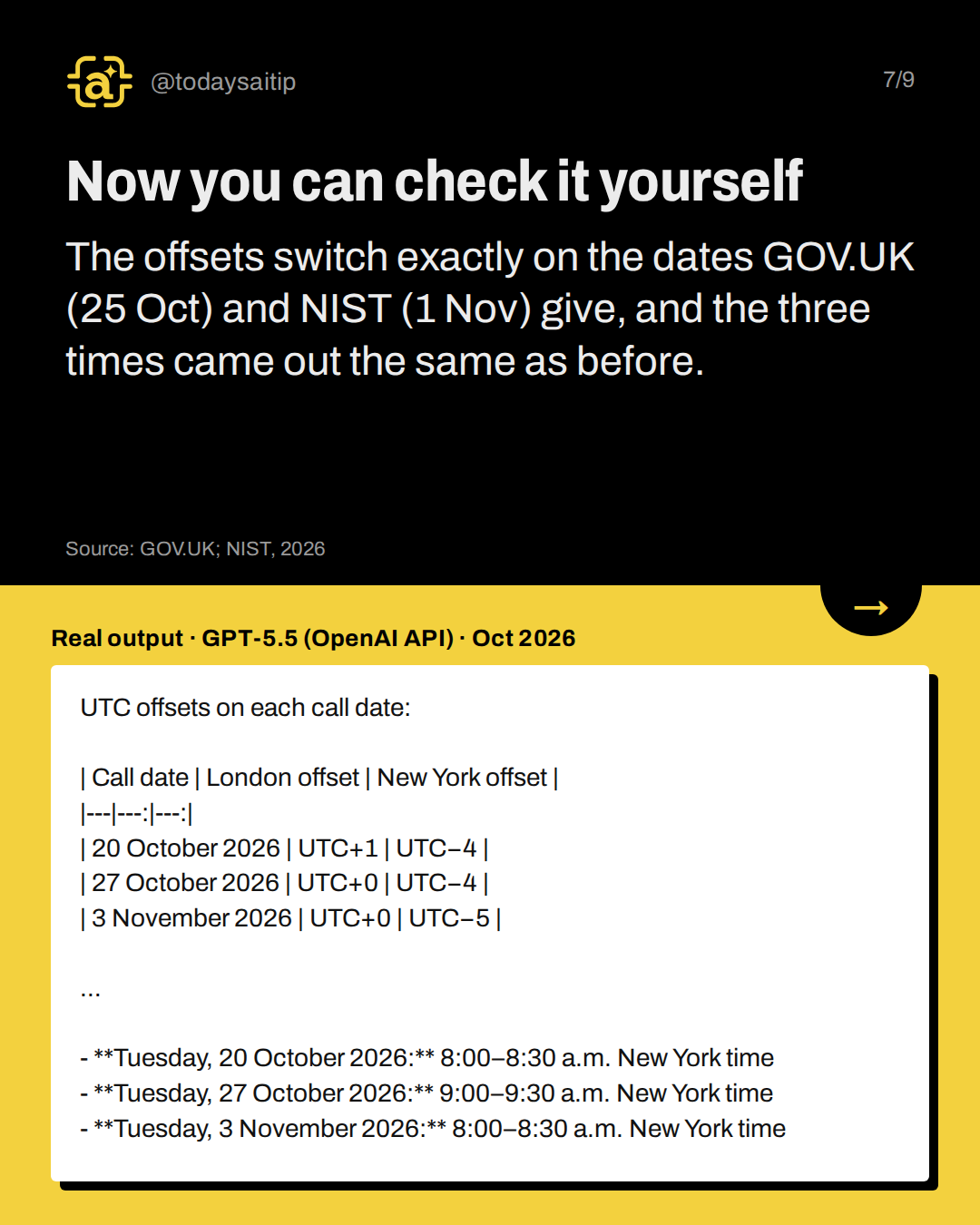
Now you can check it yourself
Real output · GPT-5.5 (OpenAI API) · Oct 2026
The offsets switch exactly on the dates GOV.UK (25 Oct) and NIST (1 Nov) give, and the three times came out the same as before.
Source: GOV.UK; NIST, 2026
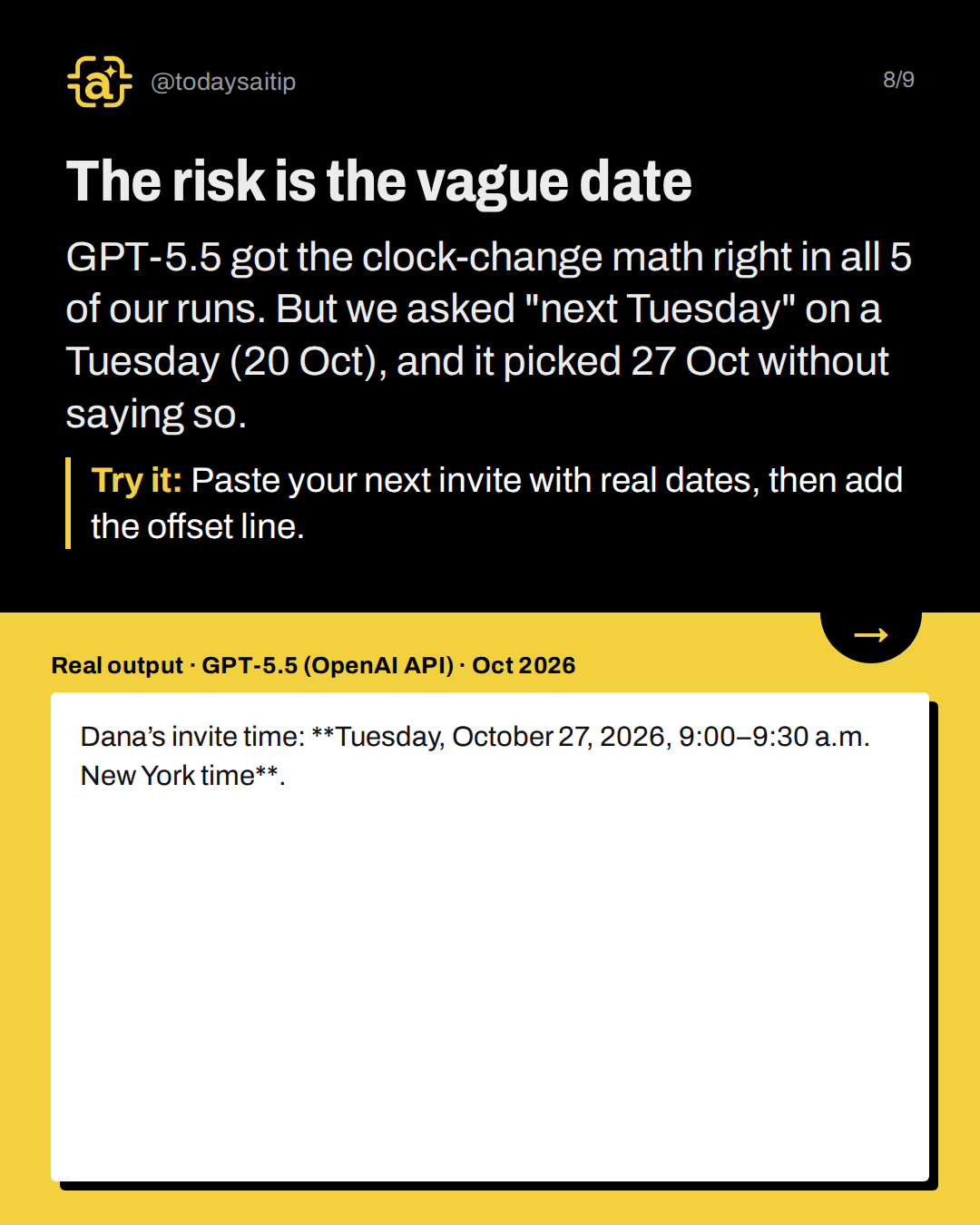
The risk is the vague date
Real output · GPT-5.5 (OpenAI API) · Oct 2026
GPT-5.5 got the clock-change math right in all 5 of our runs. But we asked "next Tuesday" on a Tuesday (20 Oct), and it picked 27 Oct without saying so.
Try it: Paste your next invite with real dates, then add the offset line.
Sources and assumptions
- GOV.UK: When do the clocks change?: UK clocks go back 1 hour at 2am on the last Sunday in October; in 2026 that is 25 October (and forward on 29 March 2026). (checked 2026-10-20)
- NIST Time and Frequency Division: Daylight Saving Time (DST): US daylight saving time ends at 2:00 a.m. on the first Sunday of November under the Energy Policy Act of 2005; in 2026 DST runs from March 8 to November 1 at 2 a.m. local time. (checked 2026-10-20)
Assumptions:
- New York observes US daylight saving time (Eastern: UTC−4 in summer, UTC−5 in winter); London is UTC+1 (BST) in summer and UTC+0 (GMT) in winter. These standard offsets are not printed on the GOV.UK or NIST pages: GOV.UK gives the 1-hour change and NIST the dates.
- The 4-hour gap holds from 25 Oct 2026 (UK change) until 1 Nov 2026 (US change), so it covers the working week of 26–30 Oct.
- The sample request (Oliver, Dana, Sam, the Tuesday call) is fictional.
- All successful test runs used GPT-5.5 via the OpenAI API with no web access. The Claude runs (ids before, after, weekly-before, no-date-claude) failed to execute in this environment and returned no output, so no Claude result may be shown or claimed.
- On the 'next Tuesday' run the model picked 27 Oct 2026. Our run happened on Tue 20 Oct (US evening), and the model did not say how it chose the date. 'Next Tuesday' is ambiguous when said on a Tuesday.
The short version
- From 25 to 31 Oct 2026, the gap is 4 hours.
- Ask for each city's UTC offset per date.
- Write the dates, not "next Tuesday."
- Check the clock-change dates against GOV.UK and NIST.